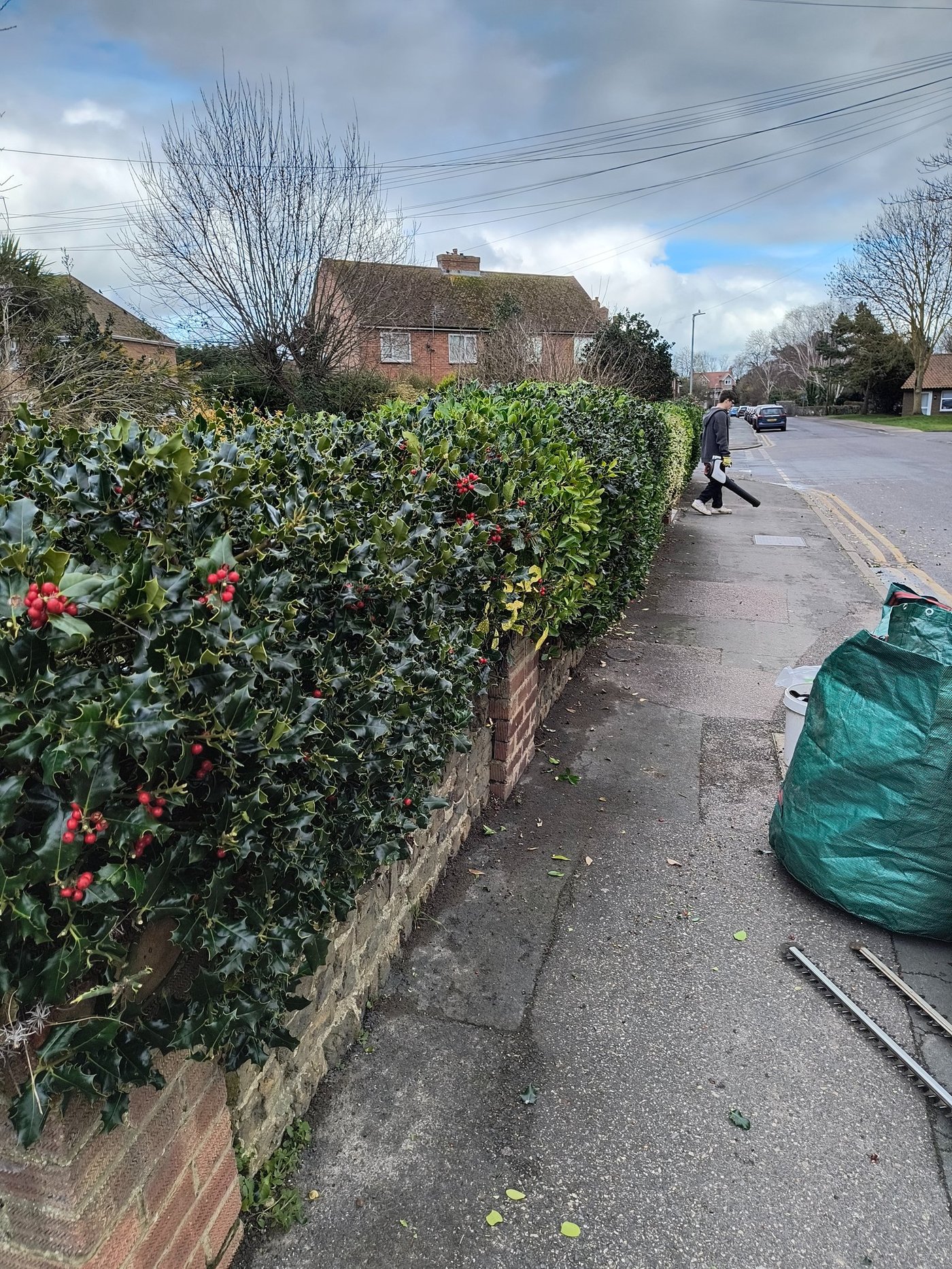
Hawthorn (Crataegus monogyna), also called quickthorn or may, is the backbone of the traditional English hedgerow and the most commonly planted native hedge in the country. You see it everywhere in East Kent: along field boundaries between Sandwich and Ash, bordering the lanes around Eastry and Worth, and in the older cottage gardens of Woodnesborough and Sandwich Bay.
It is a tough, adaptable plant that grows on almost any soil, tolerates exposure and hard cutting alike, and supports an extraordinary range of wildlife. But hawthorn is also the hedge species where the timing of your cut matters most. Here is how to think through that decision.
The nesting-season rule is especially important for hawthorn
Under the Wildlife and Countryside Act 1981, it is an offence to damage or destroy an active bird's nest. Hawthorn is one of the most heavily used nesting shrubs in Britain, particularly by thrushes, blackbirds, dunnocks and whitethroats. Nesting season runs roughly from 1 March to 31 August. The safe cutting window for hawthorn is September to February. Never cut between March and August without first inspecting the hedge thoroughly for active nests.
Before you start
- Thick gloves are essential. Hawthorn spines are long, hard and can penetrate ordinary garden gloves. Use thorn-resistant or heavy leather gloves.
- Eye protection: flying thorns from a powered trimmer are a serious hazard.
- Ear defenders for petrol or electric trimmers.
- If using a corded electric trimmer, plug into an RCD adaptor and keep the cable behind you at all times.
- For tall hedges, use a pole or long-reach trimmer rather than a ladder wherever the height allows. If a ladder is unavoidable, have someone footing it.
- Check the base of the hedge for wasp nests and brambles before starting. Both are common at the foot of an established hawthorn.
The key question: what do you want from the cut?
With most hedge species, the timing question has one clear answer. Hawthorn is different because the same hedge serves two goals that pull in slightly different directions: formal neatness and wildlife value. The decision tree below walks you through the main choices.
When should you cut your hawthorn hedge?
Is it March to August?
Yes: Stop. Check for active nests first. If any nests contain eggs or chicks, you must wait until they have fledged. If the hedge is demonstrably empty, a light trim is legally permissible but we would recommend waiting.
No: Continue to the next question.
Are there still haws (red berries) on the hedge?
Yes: Consider waiting until late November or December. Fieldfares and redwings arriving from Scandinavia for winter in Kent rely heavily on haw berries as a food source. Cutting now removes that supply.
No: The berries have been eaten. This is a good time to cut.
Is your priority a neat, formal appearance?
Yes: Cut in late August or September, just after the nesting season closes. This gives the tidiest result and the longest period of neat growth before the following spring. You will remove the berries before they ripen, but the hedge will look its sharpest.
Balanced: Cut in October. Most nests are long finished, some early haws may be on the hedge, but you get a reasonably tidy result without cutting into the peak berry season.
Is your priority wildlife?
Cut in late November, December or January, once fieldfares and redwings have had the best of the berry crop. Every extra week the haws stay on the hedge is weeks of winter food for birds. You can wait as late as February without any harm to the hedge, as it is still fully dormant.
How often to cut a hawthorn hedge
Annually or every other year, depending on how formal you want the result. Hawthorn grows quickly, particularly in the mild coastal winters around Sandwich and Deal where it rarely sees a hard frost. An annual cut keeps it tight and formal. Cutting every two years lets it put on more growth, produces more flowers and more berries, and is considerably better for wildlife.
A hawthorn hedge that is cut every other year in late November or December gets the best of both worlds: it stays manageable, but the wildlife value over the biennial cycle is much higher than an annually trimmed hedge.
Tools for cutting hawthorn
A powered hedge trimmer cuts hawthorn cleanly and quickly. Cordless battery trimmers handle most garden-scale hawthorn hedges without difficulty. The thicker stems that develop on older or less frequently cut hedges may need loppers or a pruning saw for the main framework, with the trimmer taking care of the outer growth. Petrol trimmers have more power for large field-boundary hedges.
The team at best4hedging, one of the UK's leading suppliers of hedging plants, covers hawthorn's characteristics, benefits and care requirements in their guide below.
Video: "A focus on Hawthorn hedging" by best4hedging, one of the UK's leading specialist hedging nurseries. Watch on YouTube.
Height and shape
Hawthorn can be kept at almost any height. A stockproof field boundary might be managed at 1.5 to 2 metres; a garden screen can be kept as low as a metre or allowed to reach four metres or more, depending on your space and privacy needs.
Always taper the sides slightly, wider at the base and narrower at the top. This ensures the lower growth gets enough light to stay dense. A hawthorn with heavily shaded lower growth becomes thin and gappy at the base over time, which rather defeats the purpose of a boundary hedge.
If your hawthorn hedge is developing a thick, congested centre with little new growth at the surface, it may benefit from a harder renovation cut to reinvigorate it. Hawthorn regrows vigorously from old wood and tolerates even quite drastic cutting back. See our guide to renovating a neglected hedge for the phased approach that works for most overgrown hawthorn.
Wildlife value
Hawthorn supports more insect species than almost any other native British hedging plant, with the figure often quoted at more than 300 associated species. The flowers in May (the "may blossom" that gives the tree its common name) are an important early nectar source for bees. The haws in autumn and winter feed thrushes, fieldfares, redwings, blackbirds and many other species. The dense, spiny structure provides some of the most predator-proof nesting sites available to garden birds.
In East Kent, fieldfares and redwings arrive from Scandinavia from October onwards and rely heavily on berry-bearing hedges through the winter. A hawthorn hedge around Sandwich Bay or the Eastry area managed for berry production is a genuinely meaningful contribution to the local winter food supply for these birds.
For more on managing hedges with wildlife in mind, see our wildlife-friendly trimming guide.
If you are planting a new hawthorn hedge or adding hawthorn to an existing boundary, our native hedge planting guide covers the practicalities.
A hawthorn hedge with berries still on it in January is doing more good as it stands than any amount of bird feed. Leave it a little longer if you can.
We cut hawthorn hedges all across East Kent
From field boundaries in the Ash and Worth area to garden hedges in Sandwich and Deal, we trim hawthorn at whatever time suits you. Send a photo for a free quote, most jobs booked in the same week.
Related guides
Wildlife-friendly hedge trimming
Nesting birds, hibernating hedgehogs and the law that protects both. When to cut, and when to wait.
Read the guide PlantingPlanting a native hedge for wildlife in Kent
A step-by-step checklist for choosing species, preparing the ground and establishing a native hedge in East Kent.
Read the guide